In the United Kingdom, COSHH is a set of Health & Safety regulations that legally obligates employers to ensure their staff’s protection from the risks that come with hazardous substances.
What does COSHH stand for?
COSHH stands for the Control of Substances Hazardous to Health. It’s a key piece of law that employers must comply with. Failure to adhere to COSHH legislation will have consequences such as:
- Injured or ill staff, causing downtime
- Death of employees
- Fines
- Imprisonment
- Reputational damage
COSHH symbols
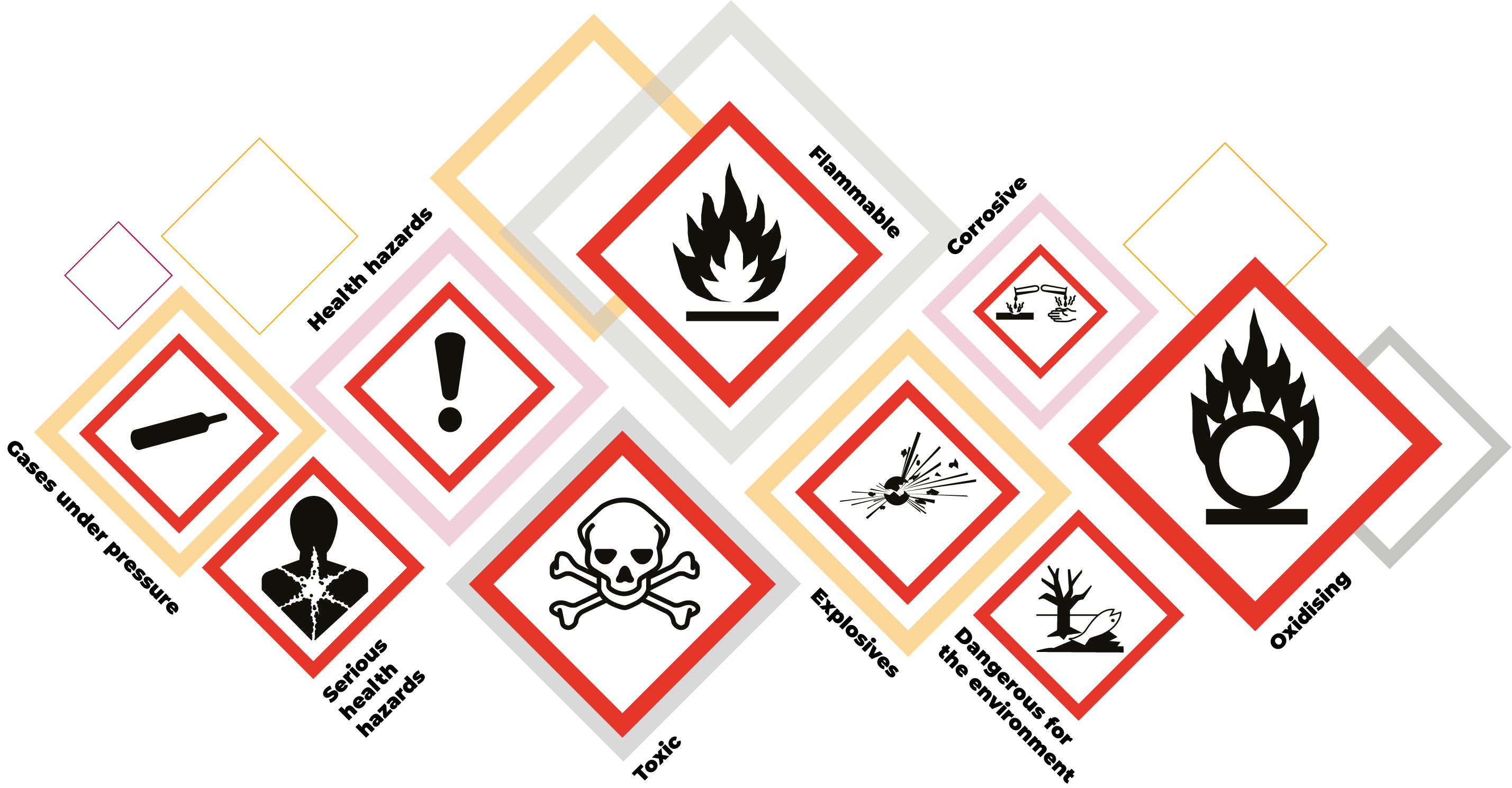
In total, there are nine primary hazard COSHH symbols. They are as follows:
- Gases under pressure: A container with compressed, liquified, refrigerated liquified or dissolved gas
- Serious health hazards: The substance can a be a breathing hazard or have long-term health implications
- Health hazards: This substance could irritate the eyes or skin, or cause inflammation or dermatitis
- Toxic: Contents that are toxic if swallowed, breathed or absorbed through the skin
- Flammable: The container has a flammable liquid, gas, solid, or an aerosol
- Explosives: The container is filled with an potentially unstable explosive substance
- Corrosive: Corrodes metal and skin
- Dangerous for the environment: Contents could be detrimental to the environment
- Oxidising: The container has an oxidising liquid, gas, or solid
What is a hazardous substance?
A hazardous substance is defined as any material capable of causing harm to human health, animals, property, or the environment. The Health and Safety Executive list the following forms as examples of hazardous substances:
- Chemicals (and products containing chemicals)
- Fumes
- Dusts
- Vapours
- Mists
- Nanotechnology
- Gases, asphyxiating gases, and biological agents
Which hazardous substance does COSHH not cover?
Whilst comprehensive, there are some hazardous substances that COSHH doesn’t cover. The reason for this is because certain substances are regulated under specific legislation. For example:
- Lead: Governed by Control of Lead at Work (CLAW) Regulations 2022
- Asbestos: Covered by Control of Asbestos Regulations 2012
- Radioactive substances: Separate legislation, like the Ionising Radiations Regulations 2017 (IRR17), deals with these substances
Other substances not covered by COSHH legislation include substances with a primary hazard that’s explosive, flammable, hazardous at high pressure or temperature, or are a certain variation of an asphyxiant.
COSHH Assessment: The key steps
A COSHH assessment is a systematic process that identifies, assesses, and controls the risks to your employees’ health from hazardous substances. You can download our free COSHH risk assessment template here to safeguard your staff.
The Health and Safety Executive outlines what to follow to conduct a COSHH risk assessment:
Identify the hazards
Whether used or produced, ascertain the hazardous substances in the workplace which might cause harm to health. For clarity, refer to product labels and the manufacturer’s COSHH safety data sheet (SDS).
Harmful substances emitted by work processes that your workface are exposed to must be considered.
Assess the risks
A risk assessment scrutinises and establishes the potential harm by understanding who might be exposed and how. This might include:
- Inhalation
- Skin contact
- Ingestion
- Injection
It must also be considered how often and how long this exposure occurs for. Additionally, it must be assessed what measures are currently in place to control risk, and what other actions are necessary.
Control the risks
Upon completing a COSHH risk assessment, you’ll have identified hazardous substances present in your workplace and how your staff could be harmed. Preventing exposure is the next step; here is how:
Elimination
Is using a specific substance a necessity? If not, remove it from the workplace—or seek a safer alternative. Failing that, you must implement control measures to mitigate exposure.
Changing process
Altering processes could result in reducing the risk of exposure. Examples could be lowering the temperature of a process to decrease the amount of vapour produced or substituting pellets for powders as they’re not as dusty.
Containment
Minimise the release of hazardous substances by enclosing the process or activity. Furthermore, use closed transfer and handling systems, and make a conscious effort to reduce employees handling materials.
Implementing a local exhaust ventilation (LEV) that extracts dust, fume, mist, gases, or vapour is an effective measure that protects employees. A competent person must assess ventilation equipment every 14 months.
Systems of work
Limit access to staff that do not need to be an area where there’s a risk of exposure to hazardous substances. Store materials in appropriate containers (COSHH cabinet) and ensure they are correctly labelled.
Cleaning
Even whilst cleaning, staff are vulnerable to exposure of hazardous substances. Avoid this by organising the workplace for efficient cleaning. Ensure the correct equipment is accessible to deal with spillages.
Personal protective equipment (PPE)
Should you not be able to control exposure through other means, provide employees with personal protective clothing and equipment. Do not rely on PPE as a control measure—it is not as effective as other measures.
COSHH training
Workers need to understand the results of your COSHH risk assessment, particularly, how it affects them. Advise them of the hazards and risks, and how they can protect themselves.
Staff must also know how to properly use control measures and PPE—relevant training can equip employees with the necessary knowledge.
Furthermore, workers must be aware of the findings of any monitoring of exposure, as well as the results of health surveillance.
What is health surveillance?
Health surveillance is any activity whereby information relating to employees’ health is collected, which helps protect them from risks at their workplace.
Why is health surveillance important?
Its objectives are to protect the health of staff through detecting adverse changes or disease early, obtaining data for detecting or evaluating health hazards, and assessing control measures.
Record the findings
Businesses with five employees or more are legally mandated to document any significant findings from their COSHH risk assessment. Irrespective of headcount, though, it is advisable for all organisations to keep a written record of their findings.
Records should include the identified hazards, the risks, which control measures have been implemented, and protocols in the event of an emergency.
Monitor & review
Early review of the COSHH risk assessment ensures it’s relevant and keeps track of any changes in the workplace—staff, processes, substances, or equipment. Also, control measures must be assessed, ensuring that they’re still effective.
FAQs: What is COSHH?
As an employer, what are my responsibilities under COSHH?
You must protect your employees and others from health risks deriving from hazardous substances in the workplace. This includes performing COSHH risk assessments and applying proper control measures.
Does COSHH legislation apply to my business?
Irrespective of your company’s size, if your organisation uses or produces hazardous substances, COSHH is applicable.
What happens if I don’t comply with COSHH regulations?
Your business will face severe consequences if you don’t adhere to COSHH legislation. This could be fines or imprisonment. Also, injury or ill health of your employees could damage your company’s reputation.
How do I identify hazardous substances in my workplace?
Create a checklist of all substances used or produced in your workplace. A key resource to support this process is checking the manufacturer’s COSHH safety data sheet—suppliers are legally required to provide this information for hazardous products.
Do I need a specific qualification to conduct a COSHH assessment?
The person carrying out the assessment must be “competent”; meaning they should have knowledge and experience in understanding hazardous substances.
Final say: What is COSHH?
It’s a set of Health & Safety regulations that means employers are legally required to safeguard staff from the harms associated with hazardous substances.
Conducting a COSHH risk assessment assists companies with identifying hazards, evaluating the risk (who could be harmed and how), and provides steps to implement control measures, such as elimination, COSHH training, and containment.
Failing to follow COSHH legislation has ramifications. Non-compliance could lead to the harm, or death, of an employee. This would severely damage your business’s reputation, making retention and recruitment difficult.
As well as that, the Health and Safety Executive could issue heavy fines, or may face imprisonment.
Need support with being COSHH compliant?
Do you have concerns about whether your workplace is compliant with COSHH legislation? We have over 40 years’ experience of Health & Safety knowledge, and owing to our expertise, we’ve won several awards.
Partnering with Peninsula unlocks 24/7 Health & Safety advice, access to innovative Health & Safety software, and unlimited assistance with your documentation.
We have a dedicated SafeCheck team who conduct comprehensive audits, as well as a range of additional services, ensuring your business is protected.
Call us on 0800 028 2420 or request a call back to learn how we can help you.