


Shorter daylight hours, colder temperatures, increased rainfall, stronger winds, and a rise in seasonal illnesses can all create new challenges across a wide range of industries. These changes do not only affect outdoor workers; office-based employees, drivers, warehouse staff, and those working in public-facing roles can also experience the physical and mental effects of the changing season.
Employers have a duty to assess and manage seasonal risks to ensure employees remain safe, healthy, and productive throughout the autumn and winter months. Taking proactive steps now can help prevent accidents, reduce sickness absence, improve wellbeing, and support business continuity during periods of adverse weather.
Legal Requirements
Under the Health and Safety at Work etc. Act 1974 and the Management of Health and Safety at Work Regulations 1999, employers must assess workplace risks and implement suitable control measures to protect employees and others who may be affected by their activities.
Seasonal weather changes should form part of routine workplace risk assessments, particularly where environmental conditions could affect safety, health, welfare, transport operations, or emergency arrangements. Employers must also provide suitable working conditions, maintain workplace equipment and systems, and ensure employees receive appropriate information, instruction, and training.
How Autumn Can Physically Affect People
Reduced Daylight and Poor Visibility
Shorter days mean many employees travel to and from work in darkness, increasing the risk of incidents involving pedestrians, vehicles and workplace transport. Poor visibility can also make hazards harder to spot and contribute to fatigue and eye strain.
Slips, Trips and Falls
Wet leaves, rain, standing water and early frost can create slippery surfaces on pathways, car parks and external work areas, significantly increasing the risk of slips, trips and falls.
Cold Temperatures and Adverse Weather
Cold, wet and windy conditions can reduce concentration, increase fatigue, and make outdoor work more physically demanding. Workers in construction, agriculture, logistics and grounds maintenance may be particularly affected.
Seasonal Illness and Infection Control
Autumn often brings a rise in colds, flu and respiratory illnesses, which can lead to increased sickness absence, fatigue, reduced concentration and disruption to workplace operations.
Heating, Ventilation and Indoor Comfort
As buildings become more enclosed, poorly maintained heating and ventilation systems can affect air quality, comfort and employee wellbeing. Temperatures that are too hot or too cold may also impact productivity.
Workplace Transport Risks
Darker mornings, earlier sunsets, rain and fog can reduce visibility and increase the likelihood of transport incidents. Wet roads, fallen leaves and standing water can further affect vehicle handling and braking.
Fire Risks from Heating Equipment
The increased use of portable heaters and heating systems during colder months can raise the risk of fire if equipment is damaged, poorly maintained or used incorrectly.
Mental Wellbeing and Seasonal Change
Reduced daylight, poorer weather and seasonal changes can affect mood, energy levels and motivation, while fatigue and feelings of isolation may become more common during the darker months. Severe Weather and Emergency Preparedness
Storms, flooding, high winds and power outages can disrupt operations and place employees at risk. Organisations should ensure emergency arrangements remain effective and up to date.
Key Control Measures
Employers should take a proactive approach to managing autumn-related risks by reviewing risk assessments and identifying how seasonal weather changes may affect their workplace. External walkways, car parks, and traffic routes should be inspected regularly to ensure they remain safe and well-lit as daylight hours reduce. Suitable weather-appropriate clothing and personal protective equipment should be provided for employees working outdoors, while heating, ventilation, and air conditioning systems should be maintained to ensure a comfortable and healthy indoor environment.
Organisations should also promote good hygiene practices to help reduce the spread of seasonal illnesses, monitor employee wellbeing and fatigue, and provide support where required. Workplace transport arrangements should be reviewed to address the increased risks associated with darkness, rain, fog, and poor visibility, while fire safety checks should be carried out on heating equipment and portable heaters. Finally, emergency procedures and business continuity plans should be reviewed to ensure the organisation is prepared for severe weather events, flooding, storms, and potential power outages.
Summary
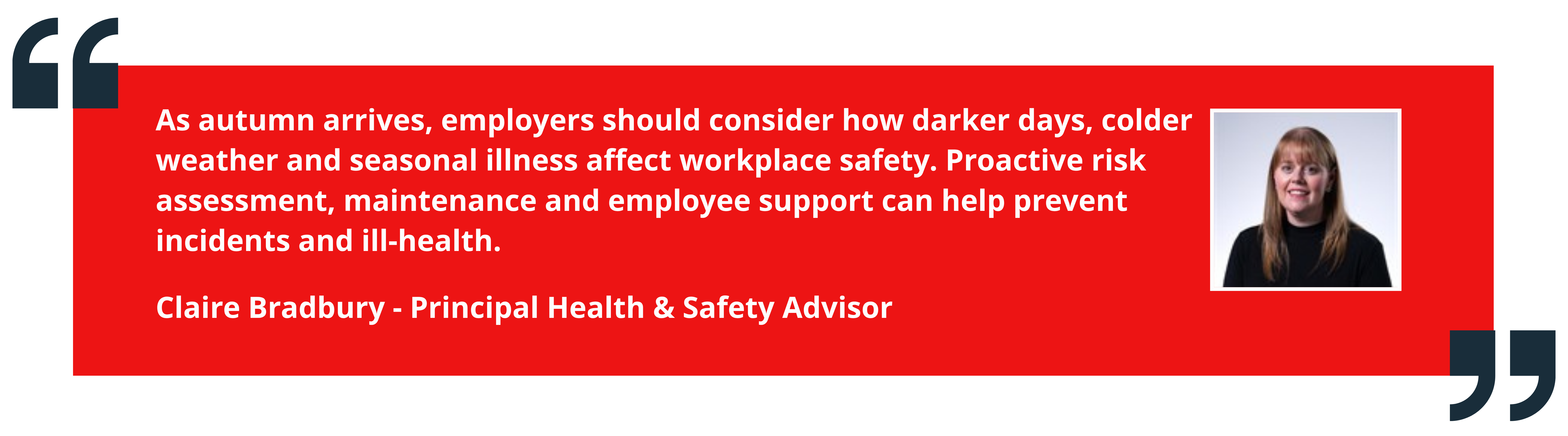
Autumn brings a predictable range of workplace health and safety challenges that can affect employees both physically and mentally. Reduced daylight, colder temperatures, seasonal illnesses, transport risks, heating-related hazards, and severe weather can all impact employee wellbeing and workplace safety.
By planning ahead, maintaining facilities and equipment, supporting employees, and implementing effective seasonal controls, organisations can help ensure their people remain safe, healthy, and productive throughout the autumn and winter months.


